PTSD and complex trauma
This page is reference information compiled from the cited sources. It is not medical advice. For any decision about health, diagnosis or care, consult a qualified professional.
What it is
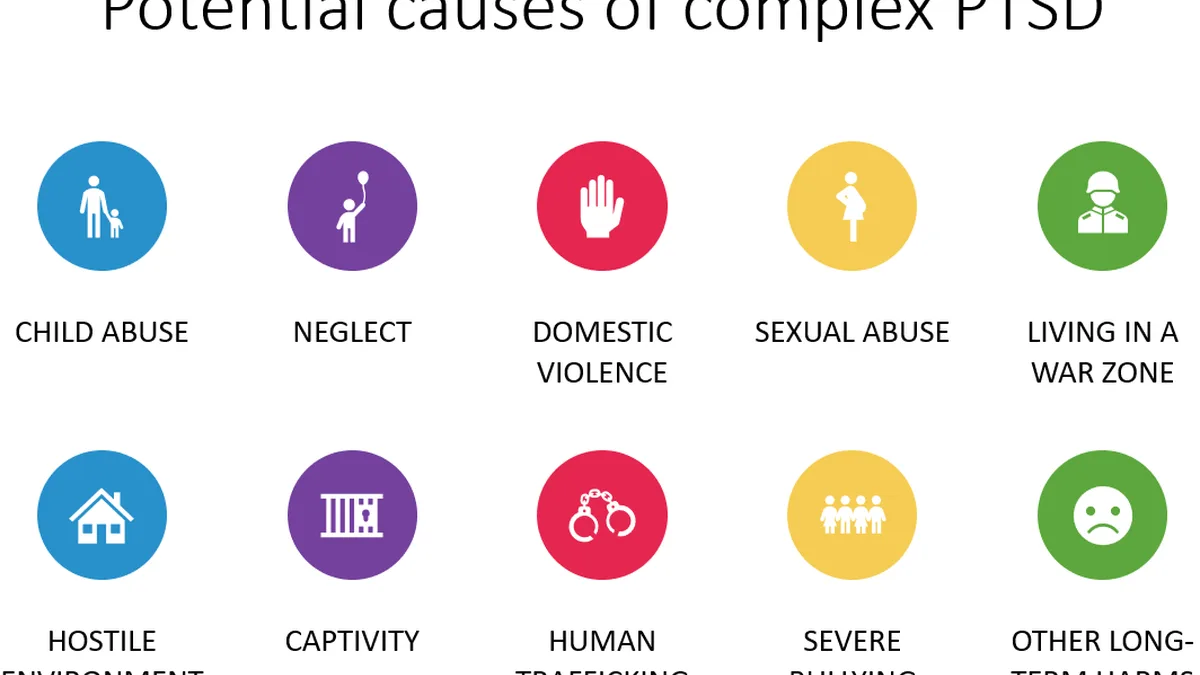
Post-traumatic stress disorder (PTSD) is a mental disorder that develops from experiencing a traumatic event. Examples of traumatic events include sexual assault, domestic violence, child abuse, warfare, natural disaster, bereavement, traffic collision, or other traumatic events on a person's life or well-being. Symptoms may include disturbing thoughts, feelings, or dreams related to the events, mental or physical distress to trauma-related cues, attempts to avoid trauma-related cues, alterations in the way a person thinks and feels, and an increase in the fight-or-flight response. These symptoms last for more than a month after the event. In the typical case, the individual with PTSD persistently avoids either trauma-related thoughts and emotions or discussion of the traumatic event and may even have amnesia of the event. However, the event is commonly relived through intrusive, recurrent recollections, dissociative episodes of reliving the trauma, and nightmares.
Key facts
Most people who experience traumatic events do not develop PTSD. People who experience interpersonal violence such as rape, other sexual assaults, being kidnapped, stalking, physical abuse by an intimate partner, and childhood abuse are more likely to develop PTSD than those who experience non-assault based trauma. In the United States, about 3.5% of adults have PTSD in a given year, and 9% of people develop it at some point in their lives. In much of the rest of the world, rates during a given year are between 0.5% and 1%. Higher rates may occur in regions of armed conflict. It is more common in women than men. A recent systematic review reported that the pooled prevalence rates for ICD-11 PTSD and complex PTSD were 2% and 4%, respectively, among adults in non-war-exposed countries. More than 50% of those with PTSD have co-morbid anxiety, mood, or substance use disorders. The risk of developing PTSD after a traumatic event is the highest following exposure to torture and sexual violence, particularly rape.
When to seek professional help
Prevention may be possible when counselling is necessary for those with early symptoms. The main treatments for people with PTSD are counselling and medication. Symptoms must persist to a sufficient degree, causing dysfunction in life or clinical levels of distress for longer than one month after the trauma, to be classified as PTSD. Recovery from post-traumatic stress disorder may be hindered when substance use disorders are comorbid with PTSD. Resolving these problems can bring about improvement. In the absence of therapy, symptoms in children may continue for decades. The source also notes that counselling is not effective when provided to all trauma-exposed individuals regardless of whether symptoms are present.
Source: Post-traumatic stress disorder (CC BY-SA 4.0 (Wikipedia)), retrieved 2026-08-27.
Latest reporting

Physical Activity and Dementia Risk: A Complex Relationship
A large systematic review and meta-analysis suggests that leisure-time exercise is associated with lower dementia risk, while occupational physical...

Enduring NMDA Receptor Encephalitis: A Complex Condition
Researchers have made significant progress in understanding N-methyl-D-aspartate receptor (NMDAR) encephalitis, a condition characterized by...