Amyloid Protein Predicts Brain Atrophy Before Dementia
A large study finds amyloid-beta accumulation in cognitively healthy older adults predicts future brain shrinkage.

Higher levels of amyloid-beta protein in the brain can predict future regional brain atrophy in older adults who do not yet have dementia. This finding comes from an analysis of data from the Amyloid Imaging to Prevent Alzheimer’s Disease (AMYPAD) Prognostic Natural History Study: Clinical*.
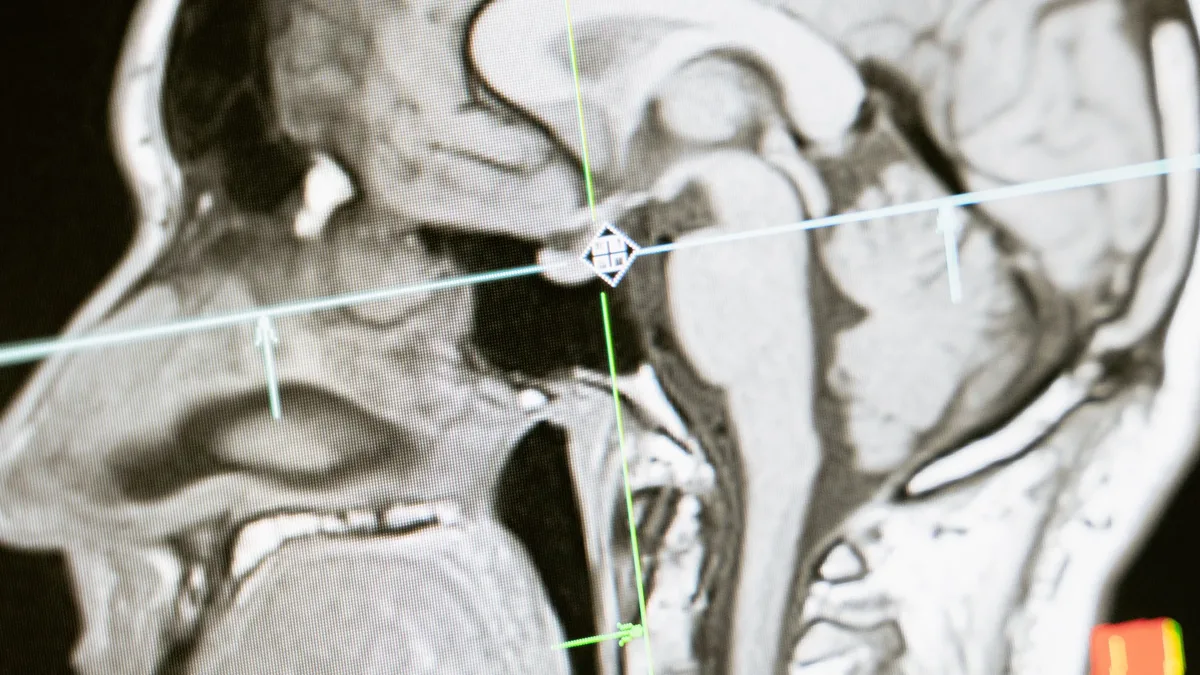
Researchers analyzed brain scans from 1,329 participants with an average age of 68.2 years. All participants had no history of dementia. The team, led by study author Leonard Pieperhoff, used magnetic resonance imaging (MRI) and positron emission tomography (PET) scans to measure brain structure and amyloid-beta levels. A subgroup of 684 participants had follow-up scans a median of 3.4 years later.
Key Findings on Brain Shrinkage
Results showed widespread brain volume shrinkage over time due to aging. This atrophy was most prominent in the temporal and parietal lobes, the hippocampus, and the amygdala. Higher baseline amyloid-beta concentrations were linked to lower volumes in specific regions at follow-up.
These regions included the lateral-temporal lobes, precuneus, posterior cingulate, amygdala, and hippocampus. Cortical thickness in these same areas was also associated with amyloid levels. The strongest predictive effects for future atrophy were in the posterior cingulate, fusiform gyrus, parahippocampal gyrus, hippocampus, and amygdala.
Influence of Sex and Genetics
The analysis revealed that the relationship between amyloid and brain shrinkage was not uniform across all individuals. The association was stronger in women when predicting atrophy in temporal brain regions. For carriers of at least one variant of the APOE-ε4 gene-a known genetic risk factor for Alzheimer's disease-the link was stronger in the frontal and lateral-temporal regions and the hippocampus.
A notable finding was that atrophy in the fusiform gyrus was predicted by amyloid-beta independently of levels of tau protein, another key Alzheimer's-related protein.
Implications for Early Detection
The study authors concluded that regional cortical volume and thickness could serve as sensitive markers for early neurodegeneration related to amyloid. "Our findings suggest that in older adults with mostly preserved cognition, baseline Aβ-PET predicts future brain atrophy," they wrote. They added this could help stratify risk in Alzheimer's disease prevention trials.
The research contributes to understanding the early biological changes preceding dementia. However, the study authors note that the design does not allow for causal conclusions to be drawn from the results.
The paper involved a large consortium of researchers across multiple institutions.