White House Launches NIH Women's Health Division
President Trump signed an executive order creating a Women's Health Division at the NIH and a White House task force, co-chaired by Susie Wiles and Robert F. Kennedy Jr., to address research gaps in women's health.
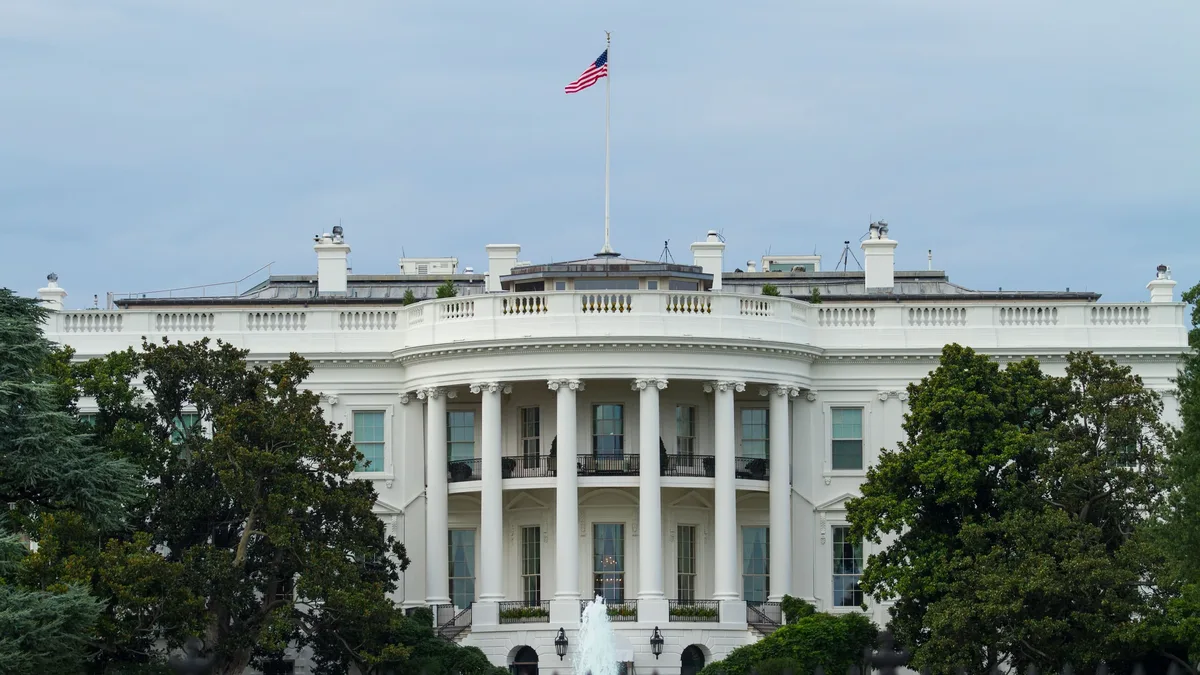
President Donald Trump signed an executive order on Monday directing the Department of Health and Human Services to establish a new Women’s Health Division at the National Institutes of Health within 90 days. The order also creates a White House task force on women’s health, which will be co-chaired by White House Chief of Staff Susie Wiles and HHS Secretary Robert F. Kennedy Jr.
First Lady Melania Trump promoted the initiative at a Washington signing ceremony, describing it as a major moment for women's health. She helped shape the order in consultation with physicians, White House officials, Kennedy, and the president. Melania Trump has kept a lower public profile during the second term but stepped forward for this launch.
First Lady’s Role and Vision
Melania Trump praised the initiative as a key shift. She outlined a vision where medical advances grant women the freedom to live life fully. The first lady's office has identified five pillars for innovation in women's health.
One pillar involves funding targeted research to develop cures for diseases that affect women, such as endometriosis. Another calls for a quicker timeline for promising therapeutics to reach female patients. Melania Trump pointed to super intelligence, advanced biotechnology, and groundbreaking therapies as tools to reinvent women’s healthcare. The goal is to improve health outcomes in all phases of life using new scientific discoveries.
Scope and Priorities of the Division
The new NIH division will not replace the existing Office of Research on Women’s Health but will have a broader mandate. It will advance research and implement evidence into clinical practice. The division will coordinate and expand research into understudied women’s health conditions.
Key focus areas include cardiovascular disease, menopause, maternal health, and other conditions that uniquely or disproportionately affect women. The initiative aims to promote new research, diagnostic technology, and treatment for understudied diseases affecting women, including mental health, Alzheimer's, osteoporosis, heart disease, and stroke.
The division has several stated priorities:
The task force will coordinate federal efforts to improve women’s health from infancy through menopause and healthy aging. It is tasked with translating research into evidence-based healthcare and identifying policy reforms. NIH Director Jay Bhattacharya said the division will close evidence gaps and expand the impact of research investments. Robert F. Kennedy, Jr. said, "For generations, women have faced unanswered questions about conditions that uniquely or disproportionately affect them."
Challenges and Criticisms
The launch occurs amid significant cuts to NIH staffing and budgets. The NIH workforce is at its lowest level in decades, with thousands of employees laid off since Trump's second inauguration. The agency was given a deadline to slash spending by 35 percent across all divisions, amounting to a $2.6 billion budget reduction.
Critics have questioned how effective the executive order can be given these cuts. They also warn that the termination of the Women’s Health Initiative could jeopardize life-saving research on cardiovascular disease, cancer, and osteoporotic fractures for senior women. In April 2025, the HHS move to terminate regional contracts for that initiative drew widespread condemnation and a multi-state lawsuit.
The executive order mandates that HHS must fund the administrative costs of the task force, but it does not include any specific funding targets or dollar amounts for the division's research. Professional groups like ACOG, the Women First Research Coalition, and the Society for Women’s Health Research supported the order and noted a proposed $20 billion investment over ten years, a figure not mentioned in the order itself.
The White House ceremony occurred weeks before the November elections. Approximately 4 in 10 independent women supported Trump in the 2024 election, a number that dropped to around a quarter in the midterm election year. Co-chair Susie Wiles recently completed breast cancer treatment. The task force is scheduled to meet after the Rose Garden ceremony.